


16 February 2026
Total committed investment in economic, free, and industrial zones reached OMR 22.4 billion
New investments in special economic zones, free zones, and industrial cities exceeded 1.4 billion Omani rials in 2025, bringing the total committed investment in areas overseen by the Public Authority for Special Economic Zones and Free Zones OPAZ to 22.4 billion Omani rials, a 6.8% increase compared to 2024.
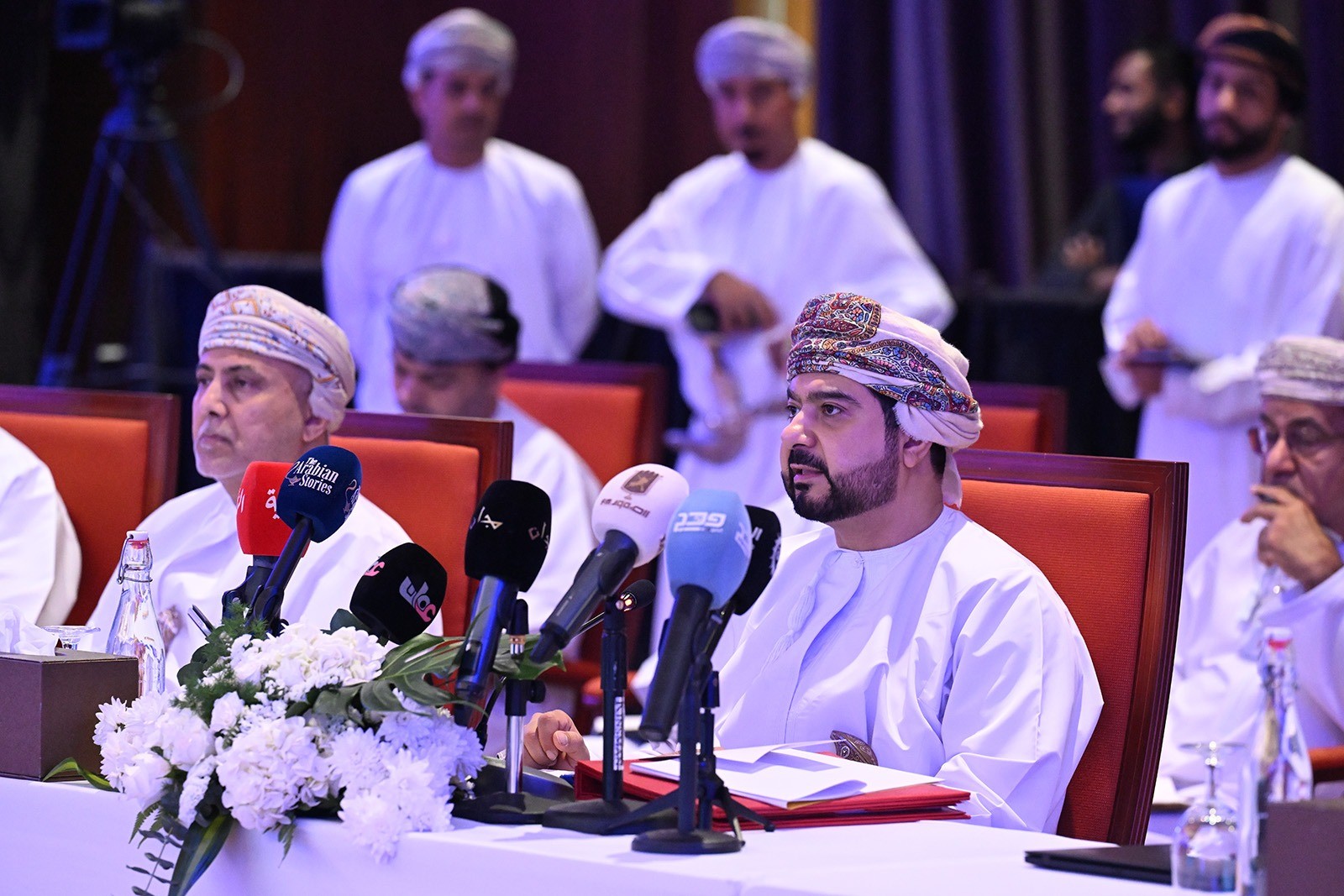
This was announced during a media briefing held by the Authority on Monday, chaired by His Excellency Qais bin Mohammed Al Yousef, Chairman of the Authority, and attended by a number of officials and CEOs of the zones.
The Public Authority for Special Economic Zones and Free Zones (OPAZ) announced, 325 new investment agreements were signed in the special economic zones, free zones, and industrial cities, covering various economic sectors, alongside the release of newly prepared areas for industrial investment in several zones. Work is underway to develop four new industrial cities in Al Mudhaibi, Al Suwaiq, Thumrait, and Madha, aimed at accommodating diverse industrial activities, enhancing the local manufacturing base, and creating additional employment opportunities for Omani youth.
Competitive and attractive investment environment
During the press briefing, H.E. Qais bin Mohammed Al Yousef, Chairman of the Public Authority for Special Economic Zones and Free Zones (OPAZ), stated that the OPAZ continues its efforts to create a competitive and attractive investment environment that supports economic diversification and enhances financial sustainability. He explained that the strategy and vision focus on establishing special economic zones, free zones, and industrial cities as preferred investment destinations by organising a business-friendly environment, offering targeted incentives, and maximising the added value of projects.
H.E. Al Yousef added that the economic zones, free zones, and industrial cities have cemented their position as integrated economic platforms that play an active role in supporting economic diversification and boosting investment attractiveness, while maximising benefits from free trade agreements and comprehensive economic partnerships.
He noted that the OPAZ has strengthened its international presence by joining the World Free Zones Organization (World FZO), enabling the zones to connect with a global network of free zones and benefit from best international practices in management.
H.E. Al Yousef confirmed that the OPAZ continues to develop a number of specialised economic clusters supporting value-added manufacturing and logistics. Shed light on the projects that include the Integrated Cold Chain Economic Cluster in the Special Economic Zone at Duqm (SEZAD), supporting the food and fisheries industries and linking them to supply and export chains; the Integrated Aluminium Economic Cluster in Sohar Industrial City; and the consultancy tender for the Integrated Mining Economic Cluster in Wilayat of Shaleem, covering market studies, feasibility studies, and detailed planning. Additionally, a study is underway to establish a silica and mining industries complex in the Special Economic Zone at Duqm, as one of the targeted industrial projects to maximise the use of the area’s available mineral resources.
Developing a legislative environment
H.E. Eng. Ahmed bin Hassan Al Dheeb, Deputy Chairman of the OPAZ, said that 2025 saw multiple achievements across the OPAZ’s focus areas, including planning and development, regulation and supervision, facilitation and post-service support, marketing and investment attraction, institutional excellence, and operations and business acceleration.
He added that last year saw further development of the legislative environment with the issuance of the Special Economic Zones and Free Zones Law under Royal Decree 38/2025, which aimed to unify the legislative framework across different zones, provide flexibility and additional incentives for strategic projects, and introduce provisions regulating real estate development projects. Additionally, Royal Decree 87/2025 established the Special Economic Zone in Al Dhahirah Governorate, while Royal Decree 88/2025 created the Special Economic Zone in Al Rawdah, located in Wilayat of Mahdha, Al Buraimi Governorate.
New projects
H.E. Al Dheeb reviewed developments in the zones, noting that the Special Economic Zone in Al Dhahirah began construction of Phase I, including main roads and drainage channels, and the signing of 11 agreements between the main contractor and small and medium enterprises valued at OMR 5.7 million, with a completion rate of around 14.9% by the end of last year.
Al Rawdah Special Economic Zone saw the signing of a development and operations agreement with Mahdha Development Company to implement Phase I over 14 square kilometres. The site was handed over to the developer and the master plan approved, while tenders were issued for drainage works and project supervision.
In the Muscat International Airport Free Zone, progress was achieved on customs buildings, gates, and the security fence, with 72% of the road and basic infrastructure networks completed.
In the Special Economic Zone at Duqm, a consultancy tender was awarded to prepare a detailed master plan for the 31-square-kilometre coastal tourism area to attract further tourism investment and develop the lifestyle in Duqm.
Aiming to reach 500 foreign companies
H.E. Al Dheeb confirmed that the OPAZ worked last year to increase foreign investment by engaging with over 500 companies, targeting sectors such as pharmaceuticals, food, sustainable construction, services, logistics and warehousing, and renewable energy technologies and equipment.
He added that the OPAZ launched a Strategic Projects Tracking platform to monitor projects from negotiation to the signing of usufruct agreements and the start of construction. By the end of the previous year, 294 projects were registered on the platform in sectors including renewable energy, petrochemicals, food and fisheries, and minerals, along with other diverse sectors.
Zone Indicators
OPAZ reviewed the indicators and achievements of the Special Economic Zones, Free Zones, and Industrial Cities through a visual presentation. The largest share of this investment was concentrated in the Salalah Free Zone at 28%, followed by the Sohar Free Zone at 26%. Both zones recorded high growth rates as a result of attracting significant agreements in the manufacturing and logistics sectors. Approximately 97% of the added investment was concentrated in the industrial sector, amounting to nearly 1.39 billion Omani Riyals. The remaining percentage was distributed across the commercial, service, logistics, and technology sectors, with relatively lower values, reflecting the continued concentration of investments in manufacturing.
The Authority also noted during its presentation that Khazaen Economic City recorded the highest growth rate in added investment, reaching approximately 63%, as a result of signing several new agreements in the industrial sector. The Sohar Free Zone also recorded an increase of 28% due to the signing of several agreements, including the Shurooq Solar Energy Agreement.
The Public Establishment for Industrial Estates (Madayn) also witnessed notable growth of 3.32% in added investment.
Creating new job opportunities
Regarding employment, H.E. Al Dheeb confirmed that the zones under OPAZ supervision provided 4,467 job opportunities for Omanis last year, surpassing the annual target of 2,500 positions. This brings the total number of Omanis working in special economic zones, free zones, and industrial cities to 30,780 out of approximately 85,000 workers, achieving a localisation rate of 36%. The amount of SMEs working in these zones reached 4,774.
Launch of updated OMap Platform and RABT project
During the briefing, the updated version of the OMap Platform was launched, serving as the central reference for spatial data and master plans for all special economic zones, free zones, and industrial cities. The platform provides a unified digital window that consolidates data for all zones, offering investors, government entities, and developers access to accurate, up-to-date information through interactive 2D and 3D maps, improving decision-making and expediting investment procedures.
The Public Establishment for Industrial Estates (Madayn) also presented the RABT platform, an intelligent data system connecting local suppliers with existing industries in industrial cities, special economic zones, and free zones. It integrates local products and services into government tender documents, linking them to procurement quantities and ensuring priority usage or supply. The platform also analyses all products and services offered by companies in industrial cities to connect them with other businesses and sectors.
One-stop shop indicators
OPAZ shed light on the achievements of the one-stop shop in 2025, including the issuance of 2,509 economic activity licenses, 1,125 public service licenses, 2,605 commercial registrations, 131 environmental licenses, and 225 environmental permits. Additionally, 419 investor visas and 7,114 work permits were issued, alongside 284 building permits, reflecting the growing volume of services and streamlined procedures.
Environment and natural resources
In 2025, the Special Economic Zone at Duqm signed a wind turbine project worth OMR 70 million, with Phase I producing turbine components and Phase II manufacturing turbine towers. In the Sohar Free Zone, a project to manufacture and supply high-efficiency solar cells and modules was signed, targeting 6 GW of solar cells and 3 GW of modules annually. The second and third phases of the ACME Green Hydrogen and Green Ammonia project in Duqm cover 80 square kilometres, with each phase expected to produce 71,000 tonnes of green hydrogen and 400 tonnes of green ammonia annually. Ongoing projects include the ACME project (over 50% completed in Phase I and the Green Steel Plant by Jindal, exceeding 30% completion.
Governance, administration, and resources
In 2025, OPAZ achieved 75% in institutional excellence evaluation, performed positively across 26 indicators, ranked among the top 10 government entities in five main indicators, and obtained ISO 9001:2025 certification for quality management across all administrative divisions and the SEZAD. In digital services, the OPAZ achieved 28% of the 30% digital transformation target for 2025 through service documentation, simplification, automation, and enhanced user experience. A total of 25 internal and external services were automated, improving efficiency and user satisfaction.
Tajawob platform was activated, handling 167 requests by the end of 2025, including 28 proposals, 78 complaints, 46 inquiries, and 15 reports, with response times ranging from under 10 minutes to two days.
A successful experience
The media briefing witnessed a review of a successful experience from Al Rusayl Industrial City, which is the experience of Areej Vegetable Oils and Derivatives Company, whose current production capacity is 240,000 tons, with 80% of its production being exported to more than 30 countries around the world, benefiting from the strategic location of the Sultanate of Oman to enhance the efficiency of import and export. It specializes in the manufacture, refining and packaging of edible oils, vegetable ghee and sauces, according to international quality standards, and its number of employees is 713 employees with an Omanization rate of up to 60%.
The Public Authority for Special Economic Zones and Free Zones (OPAZ) is the government body responsible for supervising, regulating, and developing all special economic zones, free zones, and industrial cities in the Sultanate of Oman. OPAZ oversees an integrated system of investment zones, including three free zones: Salalah Free Zone, Sohar Free Zone, and Al Mazunah Free Zone; three special economic zones: Duqm Special Economic Zone, Al Dhahirah Economic Zone, and Al Rawdah Economic Zone; and more than 15 industrial cities distributed across the various governorates of the Sultanate. PEZAD works to enhance the competitiveness of these zones and attract high-quality investments, thereby supporting economic diversification efforts and solidifying Oman's position as a regional hub for industry, logistics, and investment, in line with the objectives of Oman Vision 2040.